
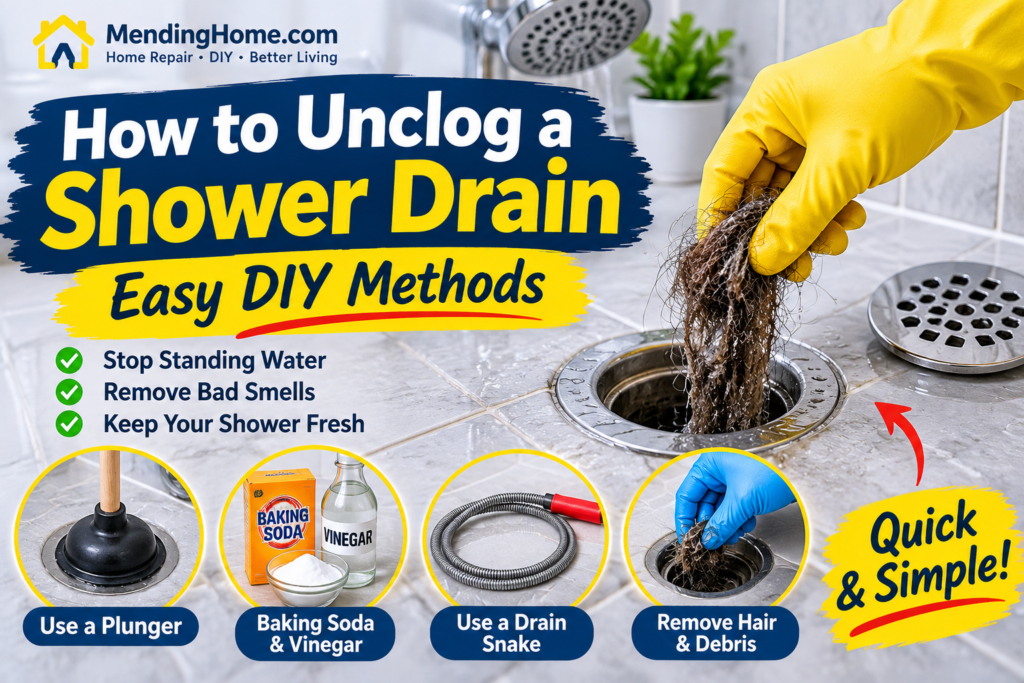
A clogged shower drain can quickly turn a relaxing shower into a frustrating experience. Water may collect around your feet, drain very slowly, or produce an unpleasant smell. In many homes, the problem is caused by hair, soap scum, dirt, and other debris building up inside the drainpipe.
The good news is that you do not always need to call a plumber. Many common shower drain clogs can be cleared with simple household tools and a little effort.
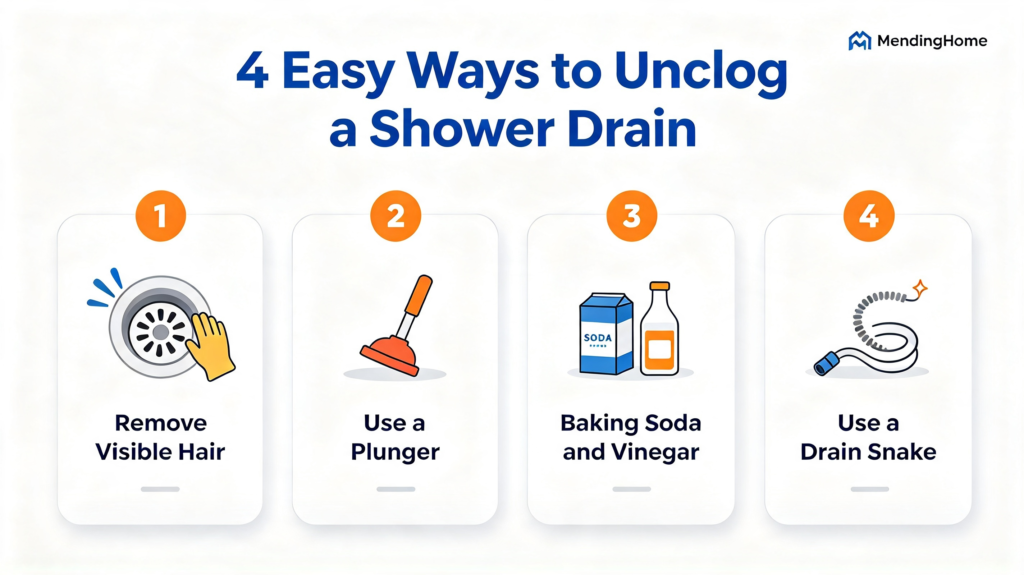
In this guide, you will learn how to unclog a shower drain using four easy DIY methods. We will also explain what causes shower drains to clog, which tools you need, and how to prevent the problem from happening again.
Fixing a clogged drain early is important. Standing water can become dirty, create bad smells, and make your shower uncomfortable to use. Let’s get started!
Common Causes of a Clogged Shower Drain
Before fixing the problem, it helps to understand what is causing it. Most shower drain clogs happen because different materials collect inside the drain over time.
Here are some common causes:
- Hair: Loose hair falls into the drain during showers. It can collect inside the pipe and trap other debris.
- Soap scum: Soap mixes with minerals in water and creates a sticky layer inside pipes. Hair and dirt easily get stuck to it.
- Shampoo and conditioner: Thick hair products can leave residue that contributes to buildup.
- Skin cells and dirt: Small particles wash off your body and can collect with soap residue.
- Hard water minerals: Mineral deposits can build up inside pipes and make the opening narrower.
- Small objects: Pieces of plastic, bath products, or other small items may accidentally fall into the drain.
Hair mixed with soap scum is one of the most common reasons shower drains become blocked. Removing this buildup early can help prevent a more serious blockage.
Tools and Materials You’ll Need
You do not need expensive equipment to clear most small shower drain clogs. Gather these basic tools before starting.
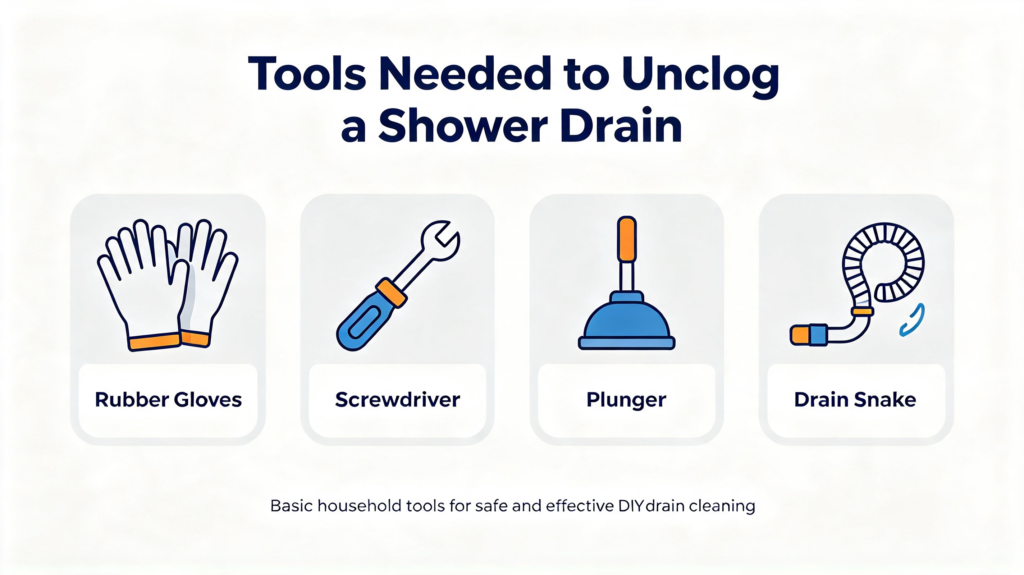
Tools:
- Rubber cleaning gloves
- A small screwdriver
- Flashlight
- Cup or small bucket
- Old towel or paper towels
- Cup-style plunger
- Plastic drain snake or hair removal tool
- Needle-nose pliers (optional)
Materials:
- Baking soda
- White vinegar
- Hot tap water
- Small trash bag for removed debris
Keep your tools nearby so you do not have to stop halfway through the job.
Safety tip: Wear gloves when handling drain debris. Avoid using boiling water if you have PVC pipes or are unsure what material your plumbing is made from. Never mix vinegar with bleach or commercial drain cleaners.
Method 1: Remove Visible Hair and Debris
This is the easiest method and should be your first step. Many shower clogs are caused by hair and soap buildup near the drain opening.
You may be able to fix the problem without using any cleaning solution.
Step-by-step instructions:
- Remove standing water: If water is covering the drain, use a cup or small bucket to remove as much as possible.
- Remove the drain cover: Carefully lift or unscrew the shower drain cover. Use a screwdriver if necessary.
- Look inside the drain: Use a flashlight to check for visible hair, soap scum, and other debris.
- Remove the blockage: Put on rubber gloves and gently pull out any hair or buildup you can reach. Needle-nose pliers can help with difficult pieces.
- Dispose of the debris: Place the removed hair and dirt in a trash bag. Do not push it farther down the pipe.
- Clean the drain opening: Wipe away loose dirt around the opening.
- Test the drain: Run warm water for a minute and check whether it drains normally.
Important: Do not force your fingers or tools deep into the pipe. If the blockage is out of reach, try a drain snake instead.
Method 2: Use a Plunger
A plunger can help remove a blockage that is deeper inside the drain. It works by creating pressure that may loosen and move the clog.
Use a clean cup-style plunger rather than a toilet flange plunger when possible.
Step-by-step instructions:
- Remove the shower drain cover if necessary.
- Make sure there is enough water in the shower to cover the rubber cup of the plunger.
- Place the plunger directly over the drain opening.
- Press down gently at first to create a tight seal.
- Move the handle up and down firmly several times without lifting the rubber cup away from the drain.
- After about 15–20 seconds, lift the plunger and check whether the water begins to drain.
- Repeat the process a few times if needed.
- Run warm water to test the drain.
Helpful tips:
- Keep the plunger sealed over the drain while pumping.
- If your shower has an overflow opening connected to the same plumbing, cover it with a wet cloth if accessible to help maintain pressure.
- Do not plunge if you have recently poured a chemical drain cleaner into the pipe. Chemical liquid could splash back onto your skin or eyes.
If the water still drains slowly, try another method.
Method 3: Baking Soda and Vinegar (Natural Method)
Baking soda and white vinegar are common household cleaning products. When combined, they create a fizzing reaction that may help loosen light residue and soap buildup inside the drain.
This method is best for mild buildup. It is not a reliable way to remove a thick hair blockage, so remove visible hair first.
Step-by-step instructions:
- Remove the shower drain cover.
- Clear away any visible hair or debris.
- Pour about half a cup of baking soda into the drain.
- Slowly add about half a cup of white vinegar.
- Allow the mixture to fizz for approximately 15–30 minutes.
- Flush the drain with warm or hot tap water.
- Run the shower and check whether the water drains more easily.
Important safety tips:
- Never combine vinegar with bleach or commercial drain cleaners.
- Do not use this method if chemical drain cleaner is already sitting in the pipe.
- Avoid pouring boiling water into PVC pipes or a shower drain if the pipe material is unknown.
- Remember that fizzing does not mean a serious hair clog has disappeared.
If the drain remains blocked, a physical cleaning tool such as a drain snake may work better.
If your bathroom sink is also clogged, check out our guide on how to fix a clogged bathroom sink.
Method 4: Use a Drain Snake (For Deep Clogs)
A drain snake is a flexible tool designed to reach blockages deeper inside a pipe. It can grab hair and pull it out instead of simply pushing it farther down.
You can find small plastic drain snakes and manual drain-cleaning tools at hardware stores.
Step-by-step instructions:
- Remove the shower drain cover carefully.
- Put on rubber gloves and keep a trash bag nearby.
- Insert the plastic drain snake or suitable manual tool slowly into the drain.
- Gently move it forward until you feel resistance.
- Follow the tool’s instructions to hook or catch the blockage.
- Slowly pull the tool back out of the drain.
- Remove any hair or debris caught on the tool and place it in the trash.
- Repeat gently if more debris remains.
- Flush the drain with warm water and check the water flow.
- Clean the tool and replace the drain cover.
Important tips:
- Do not force the snake if it gets stuck.
- Avoid sharp metal tools that could damage the pipe or drain fitting.
- Use a tool suitable for shower drains.
- If you feel strong resistance or cannot remove the blockage, stop and contact a plumber.
A drain snake is often a useful option when hair has collected farther down the pipe and cannot be reached by hand.
How to Prevent Future Shower Drain Clogs
After clearing your shower drain, a few simple habits can help prevent another blockage.
Try these tips:
- Install a drain hair catcher: A drain screen catches loose hair before it enters the pipe.
- Clean the drain regularly: Remove visible hair after every few showers.
- Brush your hair before showering: This reduces the amount of loose hair that reaches the drain.
- Rinse the shower floor: Wash away loose dirt and soap residue after using the shower.
- Use suitable cleaning products: Avoid putting thick oils or unnecessary materials into the drain.
- Clean the drain cover: Remove soap buildup and dirt from the cover regularly.
- Check slow drainage early: Do not wait until water starts collecting around your feet.
A simple hair catcher is one of the easiest ways to reduce shower drain blockages. Regular cleaning also helps you notice problems before they become serious.
When to Call a Professional Plumber
Most small shower drain clogs can be handled with basic DIY methods. However, some blockages are too deep or complicated to fix at home.
Call a professional plumber if:
- Water does not drain even after trying the methods above.
- The shower drain becomes clogged again shortly after cleaning.
- More than one drain in your home is draining slowly.
- Water backs up into another shower, bathtub, or toilet.
- You notice a strong sewage smell coming from the drain.
- Dirty or sewage-like water comes back through the drain.
- You suspect a broken or damaged pipe.
These signs may point to a deeper plumbing or sewer-line problem.
Avoid repeatedly using strong chemical drain cleaners. They may create safety risks, damage some plumbing materials, and make professional drain cleaning more difficult.
If you have already used a chemical product, tell the plumber exactly what you used before they begin working.
Frequently Asked Questions
1. Why Does My Shower Drain Smell Bad?
A shower drain may smell bad because hair, soap scum, dirt, and other organic material have collected inside the drain. Bacteria can grow on this buildup and produce unpleasant odors.
A dry or poorly functioning drain trap can also allow sewer gases to enter the bathroom.
Start by removing visible debris and cleaning the drain opening. If the smell continues, becomes stronger, or smells like sewage, contact a professional plumber.
2. What Is the Fastest Way to Unclog a Shower Drain?
The fastest method depends on what is causing the blockage.
If you can see hair near the drain opening, removing it by hand with gloves or using a plastic hair removal tool is often the quickest solution.
For a deeper blockage, a plunger or drain snake may work better. Start with the simplest method and move to another option if the drain remains blocked.
3. Can Baking Soda and Vinegar Unclog a Shower Drain?
Baking soda and vinegar may help loosen light soap residue and buildup. However, they usually cannot remove a thick blockage made of tangled hair.
For better results, remove visible hair first and then try the mixture if light residue remains. If water still does not drain properly, use a suitable drain snake or call a plumber.
Final Thoughts
A clogged shower drain is a common household problem, but you can often fix it without expensive tools or professional help.
Start by removing visible hair and debris. If that does not work, try using a plunger, baking soda and vinegar for light residue, or a drain snake for a deeper blockage.
Remember to work carefully, wear gloves, and avoid mixing cleaning chemicals. If the blockage keeps returning or you notice sewage smells or water backing up in multiple fixtures, contact a professional plumber.
Most importantly, make drain cleaning part of your regular bathroom maintenance. A simple hair catcher and a few minutes of cleaning can help keep your shower drain clear and your bathroom fresh.
If you are facing low water pressure in your home as well, read our guide on how to fix low water pressure.