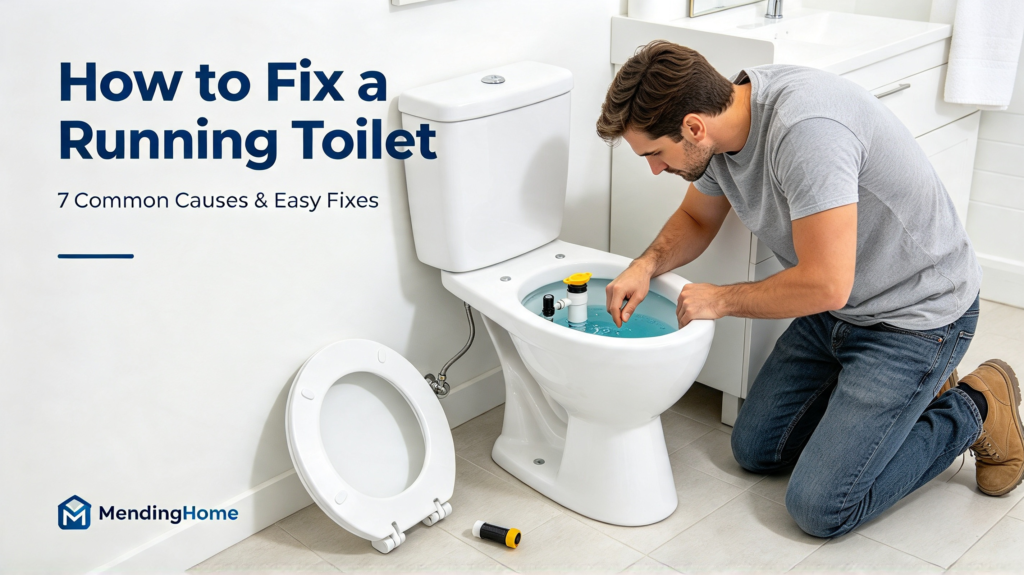
A running toilet can be annoying, especially when you hear water flowing even when nobody is using the bathroom. It can also waste a significant amount of water over time and may increase your water bill.
The good news is that many running toilet problems are caused by simple issues inside the toilet tank. A worn flapper, incorrect water level, faulty fill valve, or damaged float can often be checked and fixed without replacing the entire toilet.
In this guide, we will explain 7 common reasons why a toilet keeps running and show you simple steps to troubleshoot the problem.
If your air conditioner is also not cooling properly, check out our detailed guide on why your AC is not cooling. Why Is My AC Not Cooling ? 7 Easy Fixes
1. Check the Toilet Flapper
The toilet flapper is one of the most common causes of a running toilet.
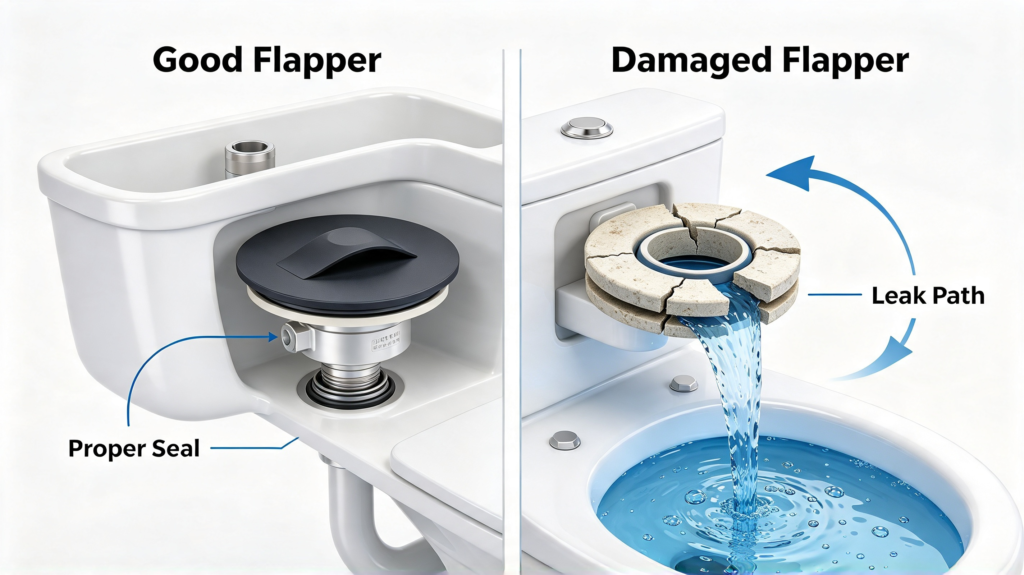
The flapper is a rubber or plastic valve inside the tank. It lifts when you flush and allows water to enter the toilet bowl. After flushing, it should close tightly and stop the water from leaving the tank.
If the flapper is old, damaged, dirty, or not sealing properly, water can continuously leak into the bowl.
How to Fix It
- Remove the toilet tank lid.
- Flush the toilet and watch the flapper.
- Make sure it closes completely after the flush.
- Check the rubber surface for cracks or damage.
- Clean around the valve if there is dirt or mineral buildup.
- If the flapper is damaged or worn out, replace it with a compatible replacement.
A replacement flapper is usually inexpensive and can solve the problem quickly.
2. Check the Toilet Float
The float controls the water level inside the toilet tank.
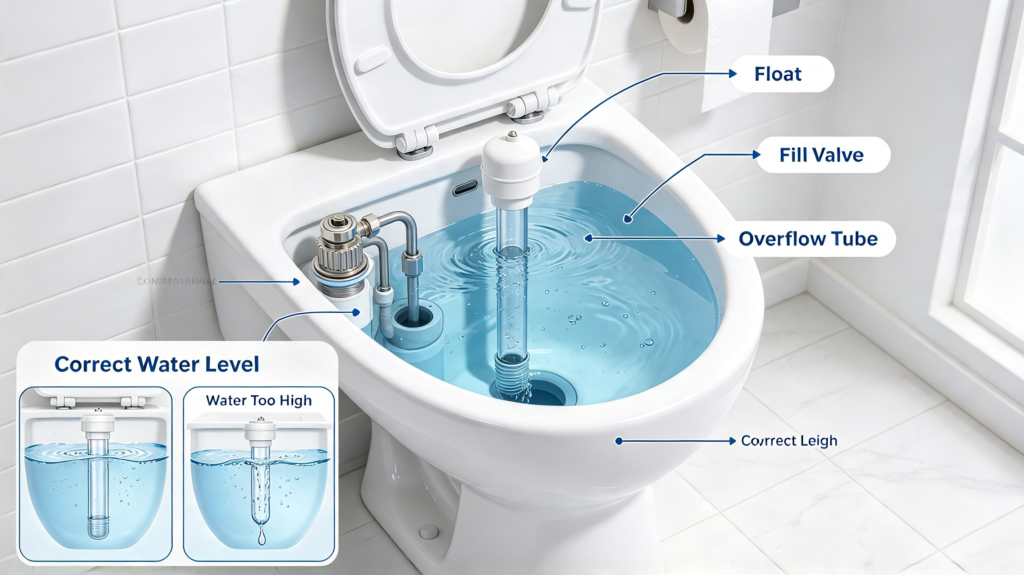
When the tank fills with water, the float rises. Once the water reaches the correct level, the fill valve should stop adding water.
If the float is set too high or is damaged, the tank may continue filling. The extra water can flow into the overflow tube, causing the toilet to keep running.
How to Fix It
Open the tank and check the float.
Depending on your toilet, you may have a float ball or a float cup.
Adjust the float according to the manufacturer’s instructions. The water level should normally remain below the top of the overflow tube.
Do not force or bend parts of the mechanism. If the float is damaged, replacing the faulty component may be necessary.
3. Adjust the Water Level
Sometimes the toilet itself is working correctly, but the water level inside the tank is too high.
Look inside the tank after it finishes filling. If water is constantly entering the overflow tube, the water level may need adjustment.
How to Fix It
Look for the water-level adjustment mechanism on the fill valve.
Depending on the toilet design, you may be able to adjust the water level using a screw, clip, or adjustment mechanism.
Make a small adjustment and flush the toilet again.
The goal is to have enough water for a proper flush without allowing water to enter the overflow tube continuously.
4. Check the Fill Valve
The fill valve controls the flow of fresh water into the toilet tank.
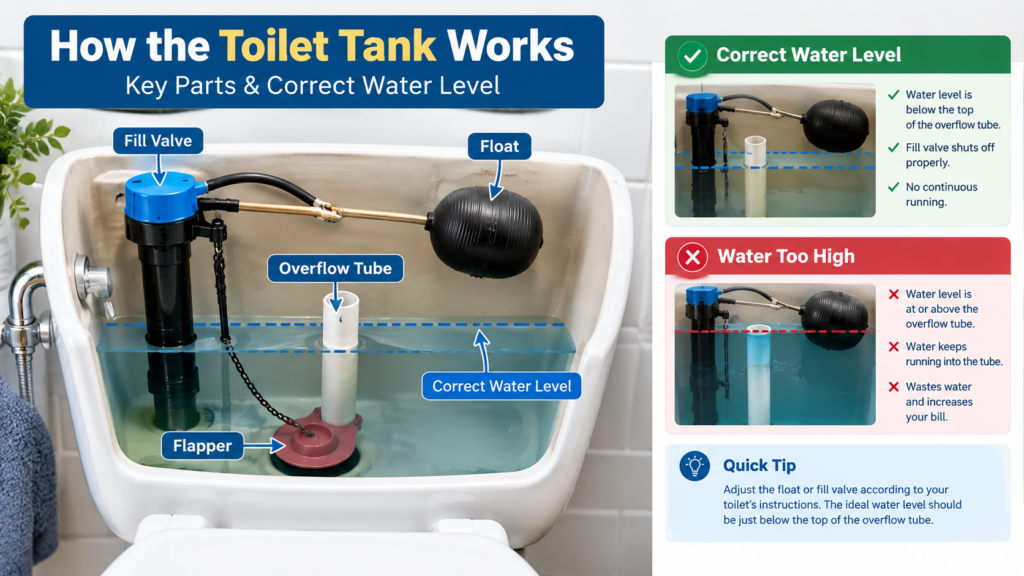
If the fill valve is worn out or malfunctioning, it may not shut off when the tank reaches the correct water level.
You may hear a constant hissing or running-water sound coming from the tank.
How to Fix It
First, check whether the valve is simply stuck or has visible debris around it.
If adjusting the valve does not stop the running water, the fill valve may need to be replaced.
Before replacing it:
- Turn off the toilet’s water supply.
- Flush the toilet to empty most of the tank.
- Follow the instructions for your replacement fill valve.
- Install the new valve securely.
- Turn the water supply back on.
- Check for leaks.
If you are uncomfortable working with the water connection, contact a plumber.
5.Check the Flush Handle and Chain
A loose or incorrectly adjusted flush handle can also cause a toilet to keep running.
The handle is connected to a chain or rod inside the tank. When you press the handle, it lifts the flapper.
If the chain is too tight, the flapper may not close completely. If it is too loose or tangled, the toilet may not flush correctly.
How to Fix It
Open the tank and inspect the chain.
Make sure:
- The chain is not tangled.
- The chain is not pulling the flapper upward.
- The handle moves normally.
- The flapper can close completely after flushing.
If the chain is damaged, it can usually be replaced easily.
6.Clean Mineral Deposits
Hard water can leave mineral deposits inside toilet tank components.
These deposits can interfere with the flapper, fill valve, or other moving parts. As a result, the toilet may not seal or shut off correctly.
How to Fix It
Inspect the components inside the tank for visible mineral buildup.
For light buildup, cleaning the affected component according to the manufacturer’s instructions may help.
Avoid using harsh chemicals that could damage rubber or plastic parts.
If a component is badly damaged or heavily affected by buildup, replacing it may be a better option.
7. Replace a Worn-Out Toilet Component
Sometimes the problem is simply an old or worn-out component.
Toilet parts can wear out over time because they are exposed to water and regular use.
Common parts that may eventually need replacement include:
- Flapper
- Fill valve
- Float
- Flush handle
- Chain
You usually do not need to replace the entire toilet just because one of these parts has failed.
How to Fix It
Identify the part causing the problem and purchase a compatible replacement.
Before buying a replacement part, check the toilet manufacturer’s information or take the old component with you to a hardware store.
Step-by-Step: How to Find the Problem
If you are not sure why your toilet keeps running, follow these simple steps.
Step 1: Remove the Tank Lid
Carefully remove the lid and place it somewhere safe.
Step 2: Flush the Toilet
Watch what happens inside the tank while the toilet flushes and refills.
Step 3: Watch the Flapper
Make sure the flapper closes completely after the flush.
Step 4: Check the Water Level
Look at the water level after the tank finishes filling. Make sure water is not continuously flowing into the overflow tube.
Step 5: Check the Float
Make sure the float moves freely and is not stuck.
Step 6: Listen for Running Water
A constant hissing sound can indicate that the fill valve is still allowing water into the tank.
Step 7: Test the Toilet
After making an adjustment or replacing a component, flush the toilet again and wait for the tank to refill.
If the water stops running, the problem may be fixed.
When Should You Call a Plumber?
Many running toilet problems are simple, but some situations require professional help.
Call a plumber if:
- Water is leaking around the toilet base.
- You notice a cracked toilet tank or bowl.
- The toilet continues running after replacing common components.
- You cannot identify the source of the problem.
- The shut-off valve does not work properly.
- You notice a serious water leak.
Do not attempt complicated plumbing or repair work if you are unsure about what you are doing. A small mistake can sometimes cause a larger water leak.
Frequently Asked Questions
1.Why does my toilet keep running?
A toilet may keep running because of a faulty flapper, incorrect water level, damaged float, faulty fill valve, or a problem with the flush handle and chain.
2.Can a bad flapper cause a running toilet?
Yes. A worn or damaged flapper may not seal the flush valve properly, allowing water to continuously leak from the tank into the bowl.
3. How do I stop my toilet from running?
Start by checking the flapper, water level, float, fill valve, and flush handle. One of these components is often responsible for the problem.
4. Is a running toilet wasting water?
Yes. A toilet that continuously runs can waste water over time. Fixing the problem can help reduce unnecessary water use.
4. Do I need a new toilet if it keeps running?
Not necessarily. Many running toilet problems can be fixed by replacing or adjusting a small component such as the flapper or fill valve.
Conclusion
A running toilet is often caused by a simple problem inside the tank. Start by checking the flapper, float, water level, fill valve, flush handle, and chain.
In many cases, cleaning, adjusting, or replacing one small component can stop the toilet from running.
If the problem continues or you notice a serious leak, it is safer to contact a qualified plumber.
A quick repair can save water, reduce waste, and keep your bathroom working properly.