
A clogged bathroom sink is a common plumbing problemt can make everyday tasks frustrating. Water may drain slowly, pool around the drain, or stop draining completely.
The good news is that many bathroom sink clogs can be cleared without calling a plumber. Hair, soap residue, toothpaste, and other debris commonly build up inside the drain over time.
In this guide, we’ll show you how to fix a clogged bathroom sink using several simple methods, starting with the easiest options and moving to more involved solutions.
Why Is My Bathroom Sink Clogged?
Bathroom sink drains usually become clogged because of a buildup of material inside the drainpipe.
Common causes include:
- Hair
- Soap scum
- Toothpaste residue
- Dirt and debris
- Mineral buildup
- Objects accidentally dropped into the drain
- Buildup around the sink stopper
If your sink is draining slowly, it’s usually better to deal with the problem early before the drain becomes completely blocked.
1. Remove Visible Hair and Debris
The easiest way to clear a clogged bathroom sink is to check the drain for visible debris.
What you’ll need:
- Rubber gloves
- Paper towel
- Flashlight
- Small pliers or tweezers
Steps:
- Put on rubber gloves.
- Remove the sink stopper if possible.
- Shine a flashlight into the drain.
- Look for hair or other visible debris.
- Pull the debris out using your fingers, tweezers, or small pliers.
- Clean the stopper before putting it back.
Hair often collects around the stopper and can prevent water from flowing freely.
After removing the debris, run water through the sink and check whether drainage has improved.
2. Clean the Sink Stopper
If removing visible debris doesn’t solve the problem, the sink stopper may be holding a larger amount of buildup.
Over time, hair, soap residue, and toothpaste can collect around the stopper.
How to clean it:
- Remove the stopper from the drain.
- Place it on an old towel or paper towel.
- Remove hair and debris.
- Wash the stopper with warm water.
- Use an old toothbrush to scrub away stubborn buildup.
- Rinse it thoroughly.
- Reinstall the stopper.
This simple step can sometimes solve a slow-draining sink without needing any drain cleaner.
3. Try a Sink Plunger
A plunger can help loosen a stubborn clogged bathroom sink drain.
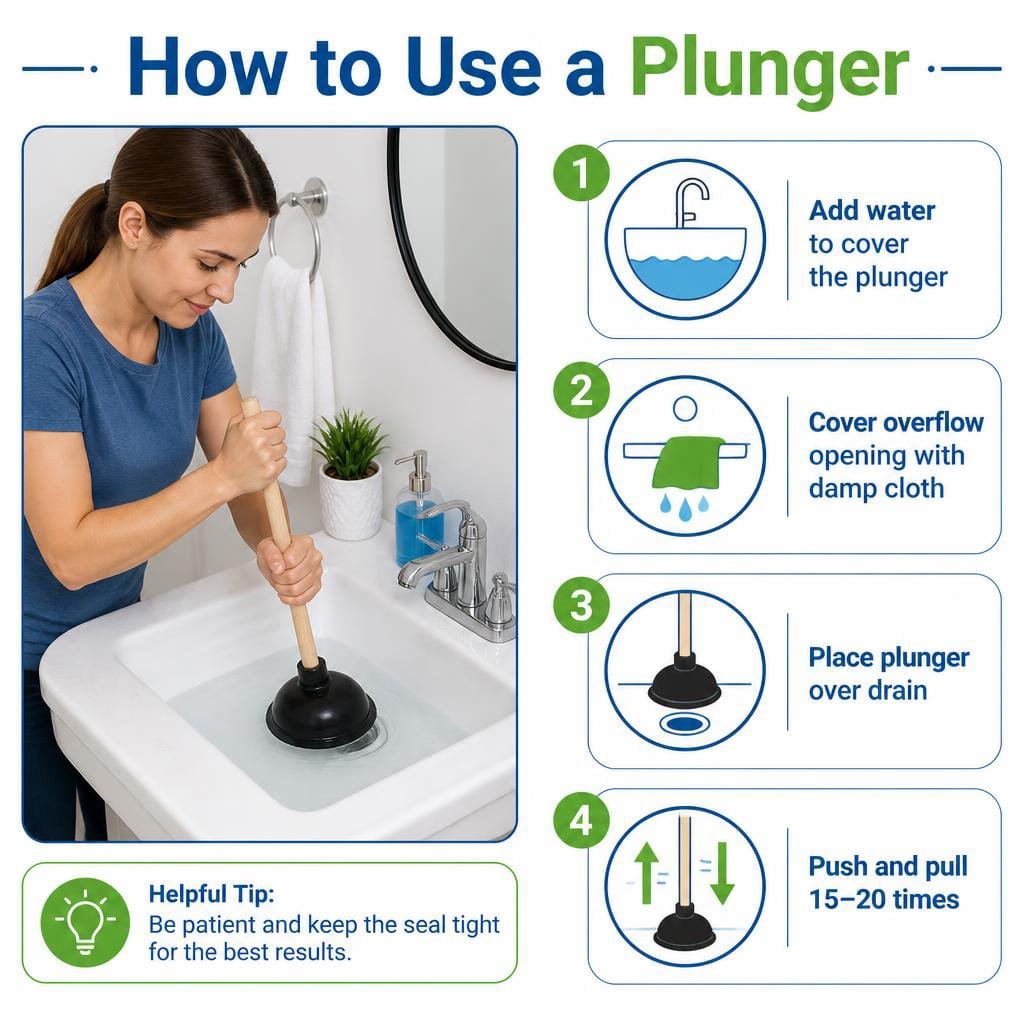
Use a small cup-style plunger designed for sinks.
Steps:
- Add enough water to the sink to cover the bottom of the plunger.
- If your sink has an overflow opening, cover it with a damp cloth.
- Place the plunger directly over the drain.
- Push down firmly.
- Pull up without breaking the seal.
- Repeat the motion several times.
- Remove the plunger and check the drainage.
You may need to repeat the process a few times before the clog breaks loose.
If the water begins draining normally, run warm water through the drain for a few minutes.
4. Flush the Drain With Hot Water
Hot water may help loosen soap residue and other soft buildup inside the drain.
However, do not pour boiling water into a sink if the plumbing manufacturer warns against it or if the pipes could be damaged by extreme heat.
Instead, use hot tap water or water that is hot but not dangerously boiling.
Try this method:
- Remove standing water from the sink if necessary.
- Slowly pour hot water down the drain.
- Wait a few minutes.
- Run the faucet and check the drainage.
This method works best for minor buildup. It may not be enough for a serious hair or solid-object clog.
5. Clean the P-Trap
If the sink is still clogged, the blockage may be inside the P-trap.
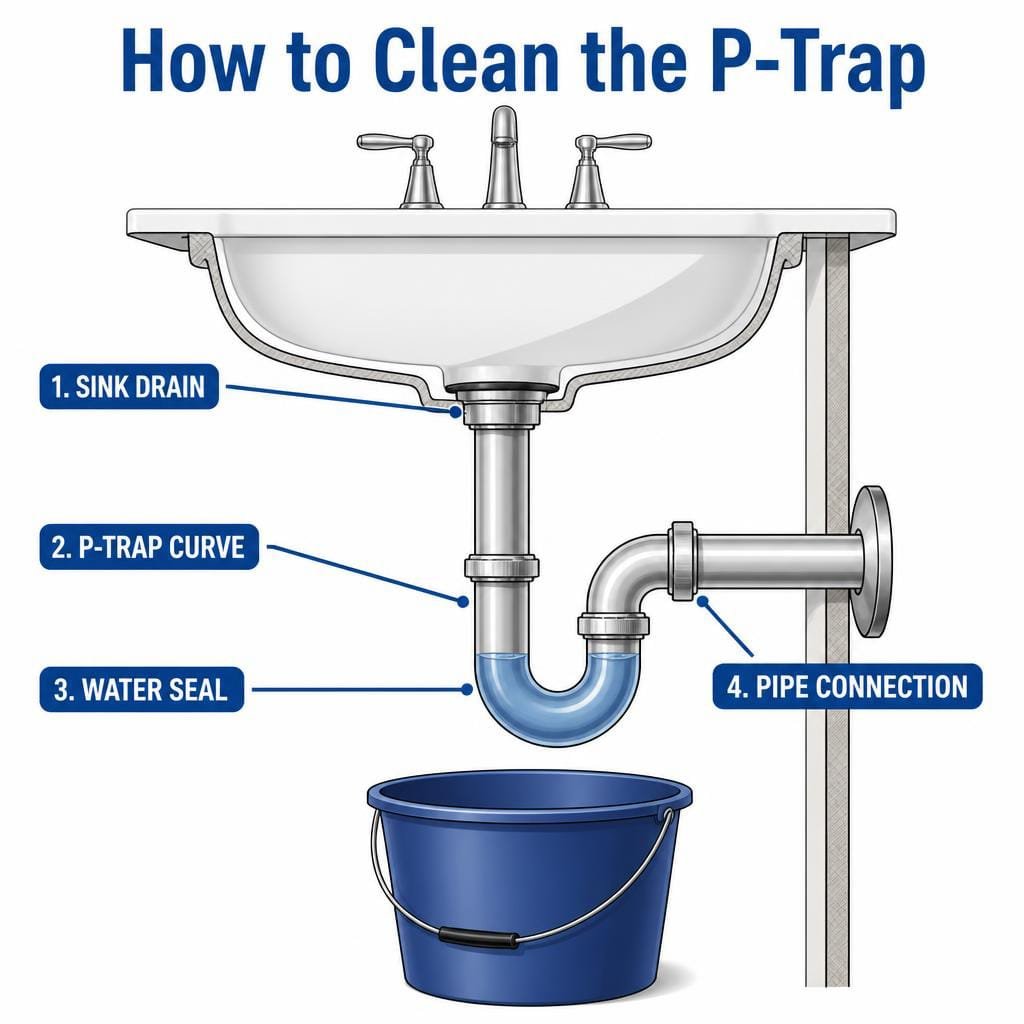
The P-trap is the curved section of pipe underneath your bathroom sink. It holds a small amount of water and helps prevent sewer gases from entering the home.
Hair, soap, and other debris can collect inside it.
Before starting:
Place a bucket underneath the P-trap because water will come out when the pipe is removed.
Steps:
- Place a bucket underneath the P-trap.
- Loosen the connections carefully.
- Remove the curved section of pipe.
- Empty the contents into the bucket.
- Clean the inside of the pipe.
- Check for hair and other debris.
- Reinstall the P-trap securely.
- Run water through the sink.
- Check for leaks.
If you’re not comfortable removing plumbing connections, skip this step and consider calling a plumber.
6. Use a Drain Snake
A drain snake can help remove a clog that is deeper inside the drainpipe.
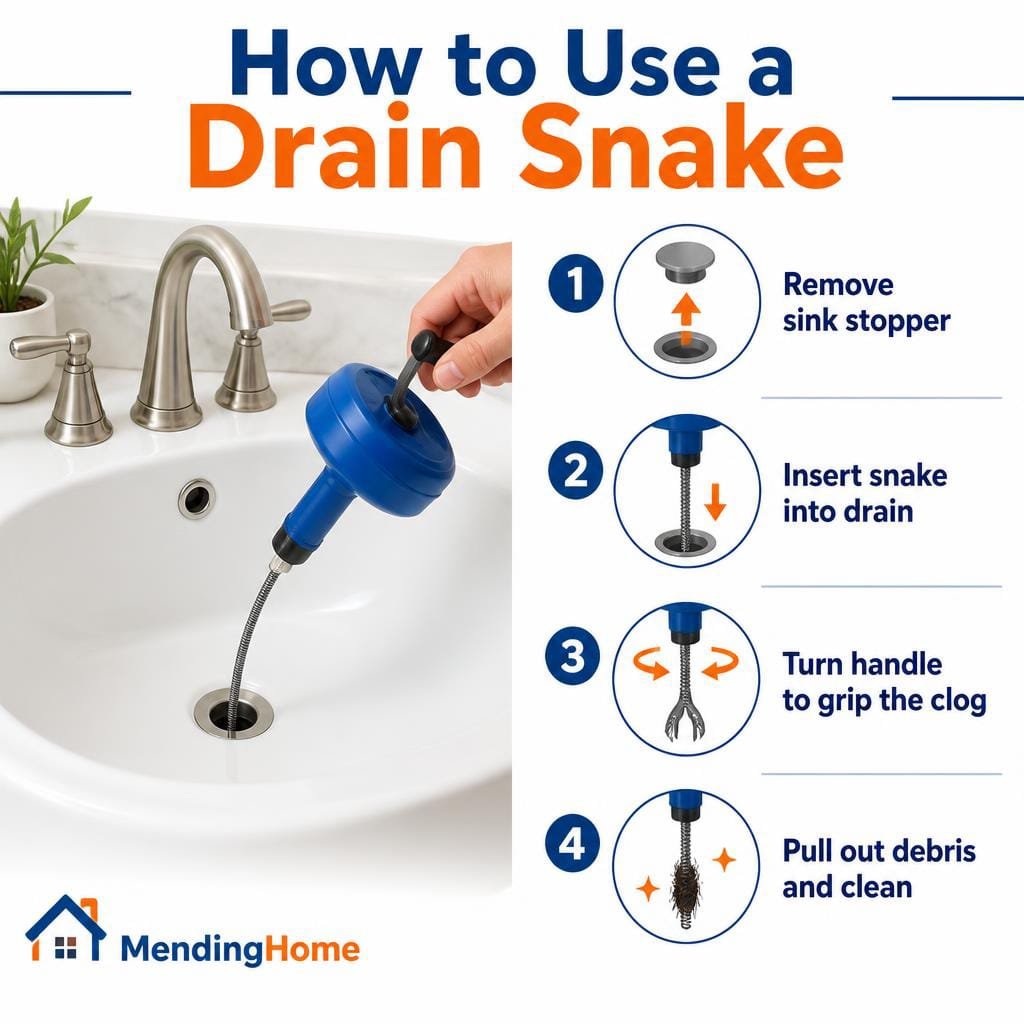
You can use a small hand-operated drain snake for many basic bathroom sink clogs.
How to use it:
- Remove the sink stopper.
- Insert the end of the drain snake into the drain.
- Push it slowly into the pipe.
- Turn the handle according to the tool’s instructions.
- Continue feeding the snake until you feel resistance.
- Work the snake back and forth to loosen the clog.
- Slowly remove the snake.
- Clean the debris from the tool.
- Run water through the drain.
Avoid forcing the tool if it becomes stuck. Excessive force could damage plumbing components.
7. Clean Mineral Buildup
Mineral deposits can also contribute to a slow or clogged bathroom sink, especially in areas with hard water.
Minerals can accumulate around the drain opening, stopper, and other plumbing components.
If you notice white, chalky buildup around the faucet or drain, mineral deposits may be contributing to the problem.
Clean accessible components carefully and follow the manufacturer’s recommendations for your sink and plumbing fixtures.
If mineral buildup is severe or located deep inside the plumbing, a professional plumber may be needed.
How to Prevent a Bathroom Sink From Clogging
Once you’ve fixed the clog, a few simple habits can help prevent it from coming back.
1. Remove Hair Regularly
Don’t allow hair to wash down the drain. Remove it from the stopper and throw it in the trash.
2. Clean the Stopper
Clean the sink stopper regularly to prevent buildup.
3. Avoid Putting Debris Down the Drain
Toothpaste residue, dirt, and other materials can accumulate inside the drain.
4. Use a Drain Strainer
A small drain strainer can help catch hair and larger debris before it enters the pipe.
5. Pay Attention to Slow Drainage
A slow drain can be an early warning sign of a developing clog.
When Should You Call a Plumber?
You can often handle a simple clogged bathroom sink yourself, but some situations require professional help.
Call a plumber if:
- The sink remains clogged after several attempts.
- Multiple drains in your home are backing up.
- You notice sewage odors.
- Water backs up into another fixture.
- There is a leak under the sink.
- You suspect a damaged or broken pipe.
- The clog keeps returning.
- You are uncomfortable working on the plumbing.
A recurring clog may indicate a deeper plumbing problem rather than a simple blockage near the sink.
Frequently Asked Questions
What is the most common cause of a clogged bathroom sink?
Hair, soap residue, toothpaste, and other debris are common causes of bathroom sink clogs. These materials can collect around the stopper or inside the drainpipe.
How do I fix a clogged bathroom sink without chemicals?
Start by removing visible debris and cleaning the sink stopper. You can then try a sink plunger, hot water, or a drain snake. Cleaning the P-trap can also help if the blockage is located there.
Can I use a plunger on a bathroom sink?
Yes. A small cup-style plunger can be useful for many bathroom sink clogs. Cover the overflow opening and create a good seal around the drain before plunging.
Why is my bathroom sink still clogged after plunging?
The clog may be deeper inside the drainpipe or located in the P-trap. In that situation, cleaning the P-trap or using a drain snake may help.
When should I stop trying to fix the clog myself?
If the clog doesn’t clear after reasonable attempts, keeps returning, or is accompanied by leaks, sewage odors, or problems with other drains, it’s better to contact a professional plumber.
Have a different plumbing problem ? Drop a comment below and lets us know.
Final Thoughts
A clogged bathroom sink is often caused by something simple, such as hair, soap residue, or buildup around the stopper.
Start with the easiest solutions: remove visible debris, clean the stopper, and try a plunger. If the clog remains, you can move on to checking the P-trap or using a drain snake.
Taking care of a slow drain early can help prevent a complete blockage and potentially save you from a more expensive plumbing problem.
If you’re dealing with another common plumbing problem, check out our guide on how to fix a running toilet:
If you are dealing with another common plumbing problem, check out our guide how to fix a running toilet How to Fix a Running Toilet: 7 Common Causes & Easy Fixes