
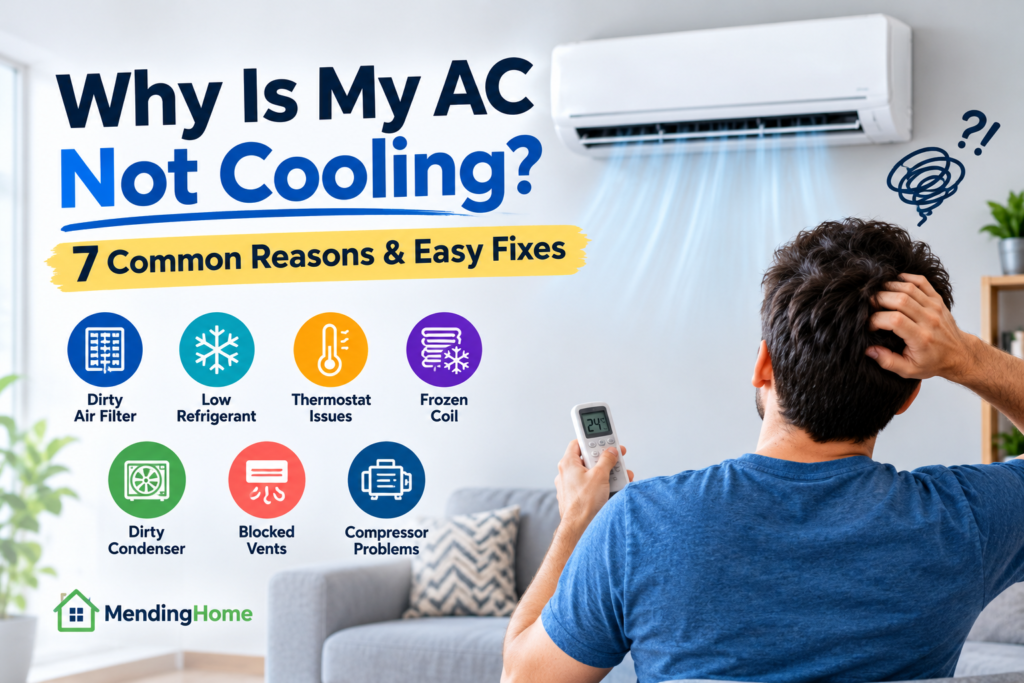
When your air conditioner is running but your home feels warm, it can be frustrating. You may hear the AC working, but the rooms do not get cool enough. In many cases, the problem is caused by something simple, such as a dirty filter, incorrect thermostat setting, or blocked air vent.
other problems, such as low refrigerant, a frozen evaporator, or compressor trouble, may require professional help.
The good news is that you can safely check several things yourself before calling an HVAC technician.
in this guide, we will explain 7 common reason why your AC is not cooling, simple fixes you can try, and when it is better to call a professional.
1. Dirty Air Filter
A dirty air filter is one of the most common reasons an AC stops cooling properly.
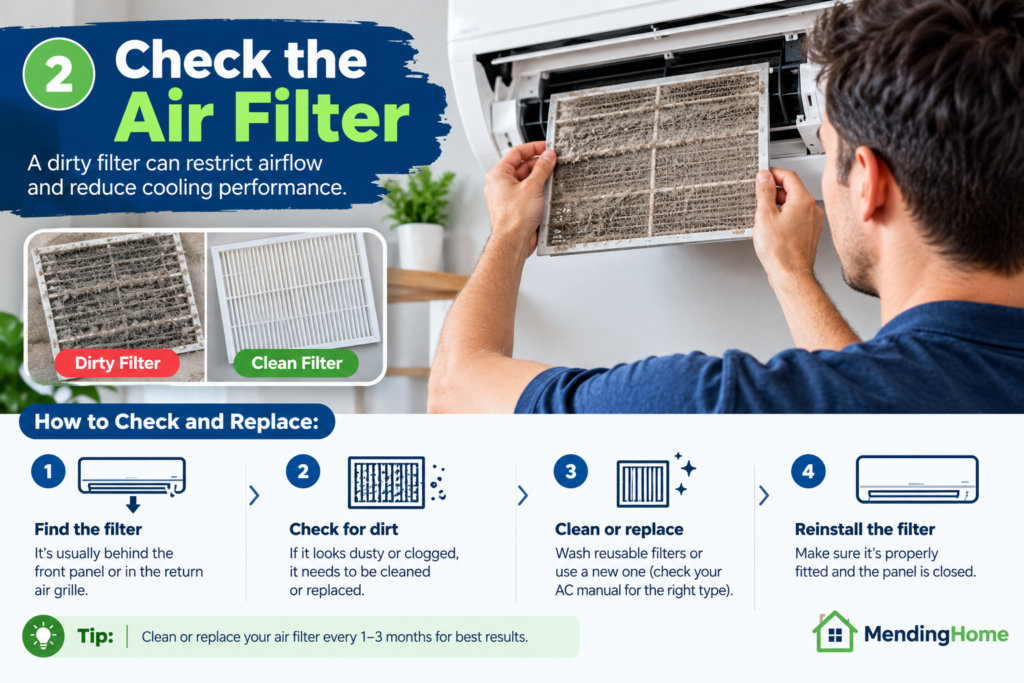
Your AC filter catches dust, dirt, pet hair, and other particles before air enters the system. Over time, the filter becomes clogged. When this happens, less air can pass through the system.
Your AC may continue running, but the airflow becomes weak and the rooms may not cool properly.
How to Fix it
First turn off your AC. Find the air filter, which is usually located near the return air duct or indoor unit.
Remove the filter and check how dirty it is.
- if it is a disposable filter, replace it with a new one.
- if it is a reusable filter, clean it according to the manufacturer’s instructions.
- Make sure the replacement filter has the correct size.
After installing the filter, turn the AC back on and wait for some time to see if the airflow improves.
Checking your filter regularly can also help AC work more efficiently.
2. Low Refrigerant
Refrigerant is an important part of the cooling process. Your AC uses refrigerant to remove heat from indoor air.
If the system has a refrigerant leak, the refrigerant level can become too low. The AC may still run, but it may not produce enough cold air.
Some common signs of low refrigerant include:
- AC blowing warm air
- Longer cooling cycles
- Ice forming on the indoor unit or refrigerant lines
- Poor cooling performance
- Hissing or bubbling in sounds in some cases
How to Fix it
Low refrigerant is not normally a DIY repair. Refrigerant systems require proper tools and handling.
if you suspect low refrigerant, contact a qualified HVAC professional. They can check the system for leaks, measure refrigerant levels, and repair the problem correctly.
Simply adding refrigerant without finding the cause of the problem may only provide a temporary solution.
3. Thermostat Settings
Sometimes the AC is working correctly, but the thermostat settings are causing the problem.
For example, the thermostat may accidentally be set to Fan, Heat, or a temperature that is too high.
How to Fix it
Check your thermostat and make sure :
- The system is set to Cool.
- The temperature is set below the current room temperature.
- The fan is set to Auto if that is your preferred setting.
- The thermostat has working batteries if it uses batteries.
For example, if your room temperature is 80F and your thermostat is set to 78F, the AC should normally be calling for cooling. if it is set to 82F. the system may not cool the room.
Also make sure the thermostat is not exposed to direct sunlight or another heat source, as this can affect its temperature reading.
4. Frozen Evaporator Coil
A frozen evaporator coil can prevent your AC from cooling properly
The evaporator coil is located inside the indoor part of the AC system. Normally, warm indoor air passes the coil and gets cooled.
if air flow is restricted or there is a refrigerant problem, the coil become too cold and ice may form on it.
You may notice:
- Ice around the indoor unit
- Ice on refrigerant lines
- Weak airflow
- AC running for a long time
- Warm air coming from the vents
How to fix it
If you see ice, turn the cooling function off and allow the system to thaw completely.
You can set the thermostat to Fan if your system allows this, but do not try to break or scrape the ice from the coil. Sharp objects can damage the equipment.
Once the ice has melted, check the air filter and make sure the vents are open.
If the coil freezes again, there may be an underlying problem such as restricted airflow, low refrigerant, or another mechanical issue. A professional should inspect the system.
5: Dirty Condenser Coils
Your outdoor AC unit has condenser coils that release heat from your home.
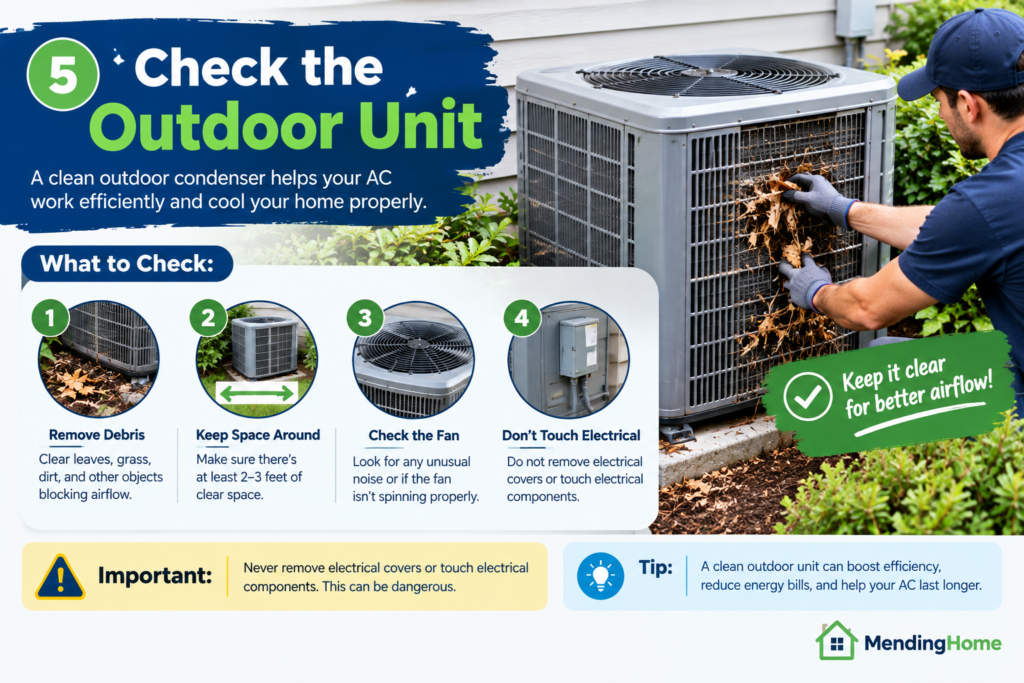
Because the outdoor unit is exposed to the weather, dirt, leaves, grass, and other debris can collect around it. Dirty coils can make it harder for the system to release heat.
As a result, Your AC may run for a long time without properly cooling your home.
How to Fix it
First, turn off the AC and disconnect power according to the manufacturers instructions.
Remove leaves, grass, and other visible debris from around the outdoor unit. Make sure there is enough open space around the unit for proper airflow.
Do not use aggressive cleaning methods or bend the delicate coils fins.
For deeper cleaning, especially if the coils are heavily dirty, consider having an HVAC professional clean and inspect the outdoor unit.
Keeping the area around the condenser clear can help maintain proper airflow.
6. Blocked Air Vents
Blocked or closed air vents can reduce airflow throughout your home.
Furniture, curtains, rugs, or other objects may accidentally cover vents. in some homes, homeowners also close vents in rooms the are not using. This can affect the overall airflow balance of the system.
How to Fix it.
walk through your home and check the supply vents.
Make Sure:
- Vents are open.
- Furniture is not covering them.
- Curtains are not blocking airflow.
- Dust and debris are not heavily covering the vent.
- Return air vents are also unobstructed.
if one room is warm while other rooms are cool, there could also be an airflow or ductwork problem.
Improving airflow can sometimes make a noticeable difference without requiring an expensive repair.
7: Compressor or issues
The compressor is one of the most important components of an air conditioning system. It circulates refrigerant through the system and plays a major role in the cooling process.
If the compressor has a problem, the AC may run without producing enough cold air.
Possible signs include:
- Warm air from the events
- Strange noises from the outdoor unit
- The outdoor unit not starting properly
- Frequent cycling
- The system shutting down unexpectedly
Step-by-Step Diagnosis:
What Should You Check First ?
Before calling a professional, you can perform a few basic checks.
Step 1 : Check the Thermostat
Make sure it set to Cool and the desired temperature is below the current indoor temperature
Step 2 : Check the Air Filter
A dirty filter can restrict airflow. Replace or clean if necessary.
Step 3 : Check the Vents
Make sure supply and return vents are open and not blocked by furniture or other objects.
Step 4 : Check the Indoor Unit
Look for unusual ice buildup, water leaks, or every weak airflow.
If you see ice, the turn off cooling and allow the system to thaw.
Step 5 : Check the Outdoor unit
Look around the outdoor condenser for leaves, grass, dirt, or other debris blocking airflow.
Do not remove electrical covers or touch electrical components
Step 6 : Listen for Unusual Sounds
Pay attention to unusual buzzing, grinding, clicking, or repeated starting and stopping.
These sounds may indicate a mechanical or electrical problem.
Step 7 : Give the System Some Time
After making simple corrections, allow the AC some time to operate. If the home still does not cool properly, the problem may require professional diagnosis.
When Should You Call a Professional ?
Some AC problems are safe to check yourself, but others require professional equipment and training.
Call an HVAC professional if :
- Your AC has low refrigerant.
- You suspect a refrigerant leak.
- The evaporator coil repeatedly freezes.
- The compressor is not working.
- The outdoor unit will not start.
- You notice burning smells.
- You hear serious electrical buzzing or sparking.
- The circuit breaker repeatedly trips.
- The system continues blowing warm air after basic troubleshooting.
- You are uncomfortable working around the equipment.
Never attempt to repair electricals components or handle refrigerant without the appropriate training and equipment.
A professional can diagnose the system and identify the actual cause instead of simply treating the symptoms.
If your toilet is also running constantly, check out our guide on how to fix a running toilet.
Frequently Asked Questions
1 : Why is my AC running but not cooling ?
A dirty filter, wrong thermostat setting, blocked airflow, low refrigerant, or another AC problem can cause this. Check the thermostat, filter, and vents first.
2. How long does it take for an AC to cool a house ?
It depends on the home size, outdoor temperature, insulation, and AC condition. If the AC runs continuously but the home stays warm, there may be a problem.
3. Can a dirty air filter stop me my AC from cooling ?
Yes A clogged filter can restrict airflow and reduce cooling performance.
4. Should I add refrigerant myself ?
No Refrigerant problems should be checked by a qualified HVAC professional because low refrigerant can indicate a leak.
Conclusion
If your AC is not cooling, start with simple checks such as the thermostat, air filter, and outdoor unit , if the problem continues, or you notice ice, refrigerant issues, electrical problems, or compressor trouble, contact a qualified HVAC professional.
Regular filter changes and basic maintenance can help your AC work properly and keep your home comfortable.
For more home repair tips, read our guide on how to fix a fix a clogged bathroom sink .